
Who We Are
The Society for Northwestern Vertebrate Biology is the longest running scientific association devoted to the study of vertebrate ecology in the Pacific Northwest. Our society strives to promote professional working relationships among ornithologists, mammalogists, herpetologists, and ichthyologists in our region.
Please explore our website and be sure to check out our flagship publication, Northwestern Naturalist. If you share our passion for learning about the natural history and ecology of the Northwest consider attending our annual meeting, a great place to meet new people while learning about research that is currently being conducted in our region.
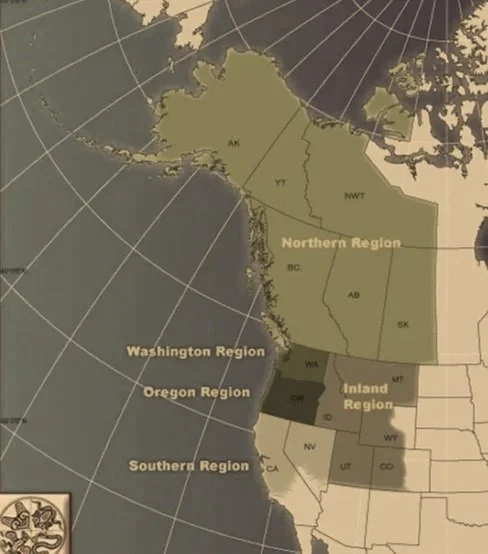
Geography
The geographic scope of SNVB and its flagship publication, Northwestern Naturalist, is northwestern North America west of the Great Plains and north of the Mojave Desert. We are divided into five regions and our board includes an elected Vice President from each region.
History of Our Society
The Society for Northwestern Vertebrate Biology was founded in 1920 as the Pacific Northwest Bird and Mammal Society. Long recognized as the preeminent union of ornithologists and mammalogists in the Pacific Northwest, the society adopted its current name in 1988 to reflect an expanded taxonomic scope that included amphibians and reptiles.
The scope expanded again in 1999 to include fish. Today the society strives to promote close working relationships among ornithologists, mammalogists, herpetologists, and ichthyologists in our region; foster exchange of scientific information and interest in the study of vertebrates; and offer a forum for these activities through meetings and publications.
Voting Board Members (Elected)
-
Aimee McIntyre
President
Two-year Term: Spring 2026-Spring 2028
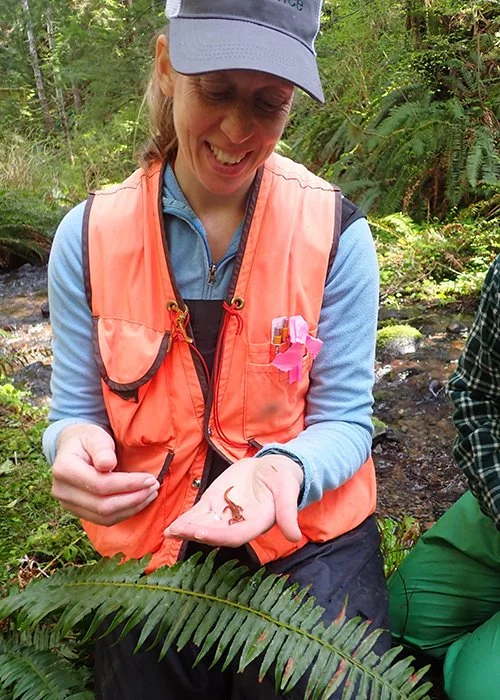
Aimee is a Senior Research Scientist with the Washington Department of Fish and Wildlife, where she conducts research to support the conservation and restoration of aquatic habitats and species. Her research has focused largely on restoration and rule effectiveness, with an emphasis on small, headwater streams and amphibians. Aimee has 28 years of experience conducting habitat and wildlife research in Washington State and holds a M.S. degree in Wildlife Science from Oregon State University. Her favorite amphibian is the Washington State endemic Van Dyke’s Salamander, but the opportunity to hold any native amphibian will undoubtedly put a smile on her face. When not working, Aimee enjoys discovering natural wonders with her family and friends, and relishes sharing seasonal outdoor traditions such as mushroom foraging in the fall and berry picking in the summer. As President, Aimee has been focused on reengaging our Board to reenvision how we do business so we can better connect with and support existing members and attract new members. She hopes that our efforts will reinvigorate the Society so that it can continue to be relevant for another 100 years.
Email: president@thesnvb.org
-
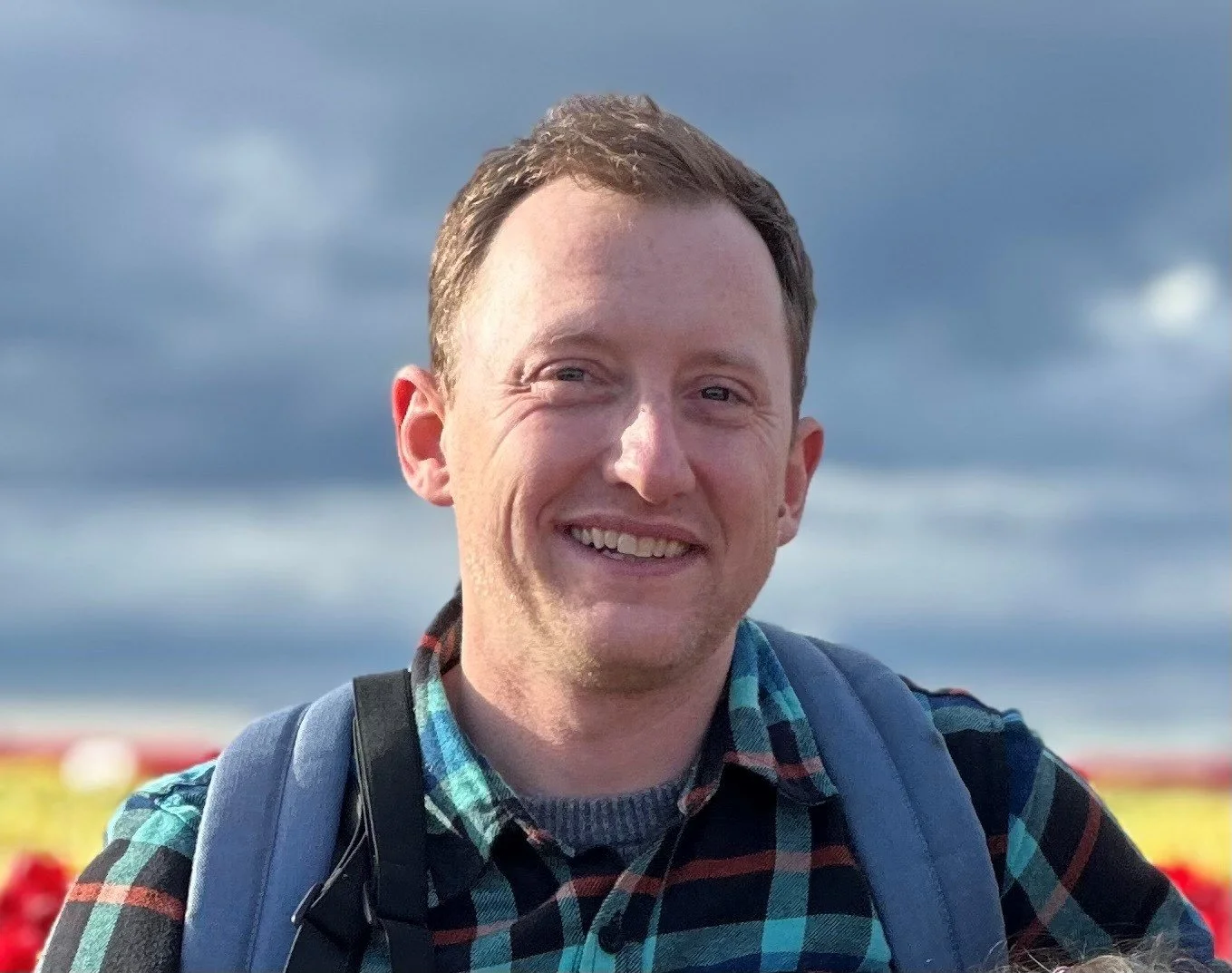
Toby St. Clair
Northern Region Vice-President
Two-year Term: Spring 2025-Spring 2027
Toby St. Clair is an ecologist and wildlife biologist with 18 years of experience in research and applied biology, including 13 years in the environmental consulting industry and 4 years leading Pacific Megascops Research Alliance, a volunteer-driven conservation science initiative. Toby is motivated in his work to enable a more sustainable relationship between people and the environment through improving understanding of wildlife in the context of their ecosystems. He is educated in environmental science, ecology, and statistics (B.A. Pitzer College, M.Sc. Simon Fraser University) and worked extensively in estuarine and riverine ecosystems in British Columbia (BC) and across the Pacific Northwest. He has consulting and research experience with bats, fish, herptiles, mammals, and birds - especially waterbirds and owls, and is experienced in various methods of ecological assessment including traditional wildlife surveys as well as eDNA, drone, and bioacoustics surveys. Toby is currently employed as the terrestrial ecology practice leader for Ausenco's environmental consulting business in Canada, working primarily on consulting and conservation science projects in BC and Alberta. While his fieldwork and projects over the past 13 years have primarily been in Canada, he’s lived in Vancouver, Washington since 2022.
-
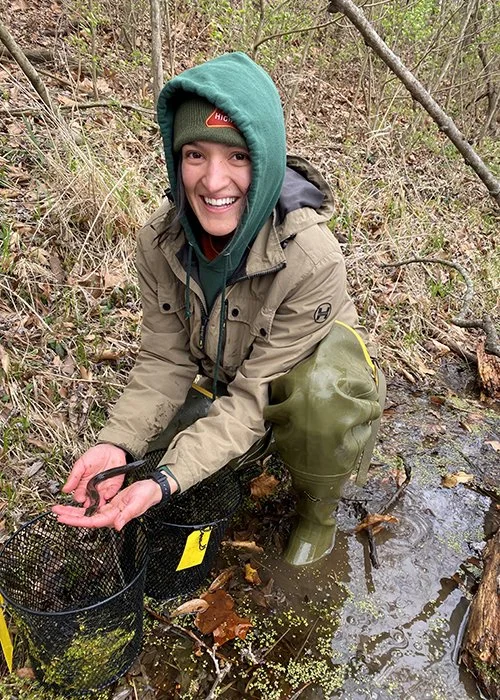
Jessica Sandoval
Washington Vice-President
Two-year Term: Spring 2026-Spring 2028
Jessica is a research biologist at the Washington Department of Fish and Wildlife specializing in pond and wetland biodiversity. She is currently researching the potential for stormwater ponds to provide habitat for amphibians, birds, and beavers. Jessica earned her master’s degree from Southern Illinois University Edwardsville studying the aquatic ecology of paedomorphic salamanders. She has extensive experience in amphibian monitoring, habitat restoration for imperiled species, and previously helped lead recovery efforts for endangered reticulated flatwoods salamanders in Florida. As a recent transplant to the Pacific Northwest, Jessica is eager to contribute to the conservation of herpetofauna and other vertebrate species in the area through work with the Society for Northwestern Vertebrate Biology.
-
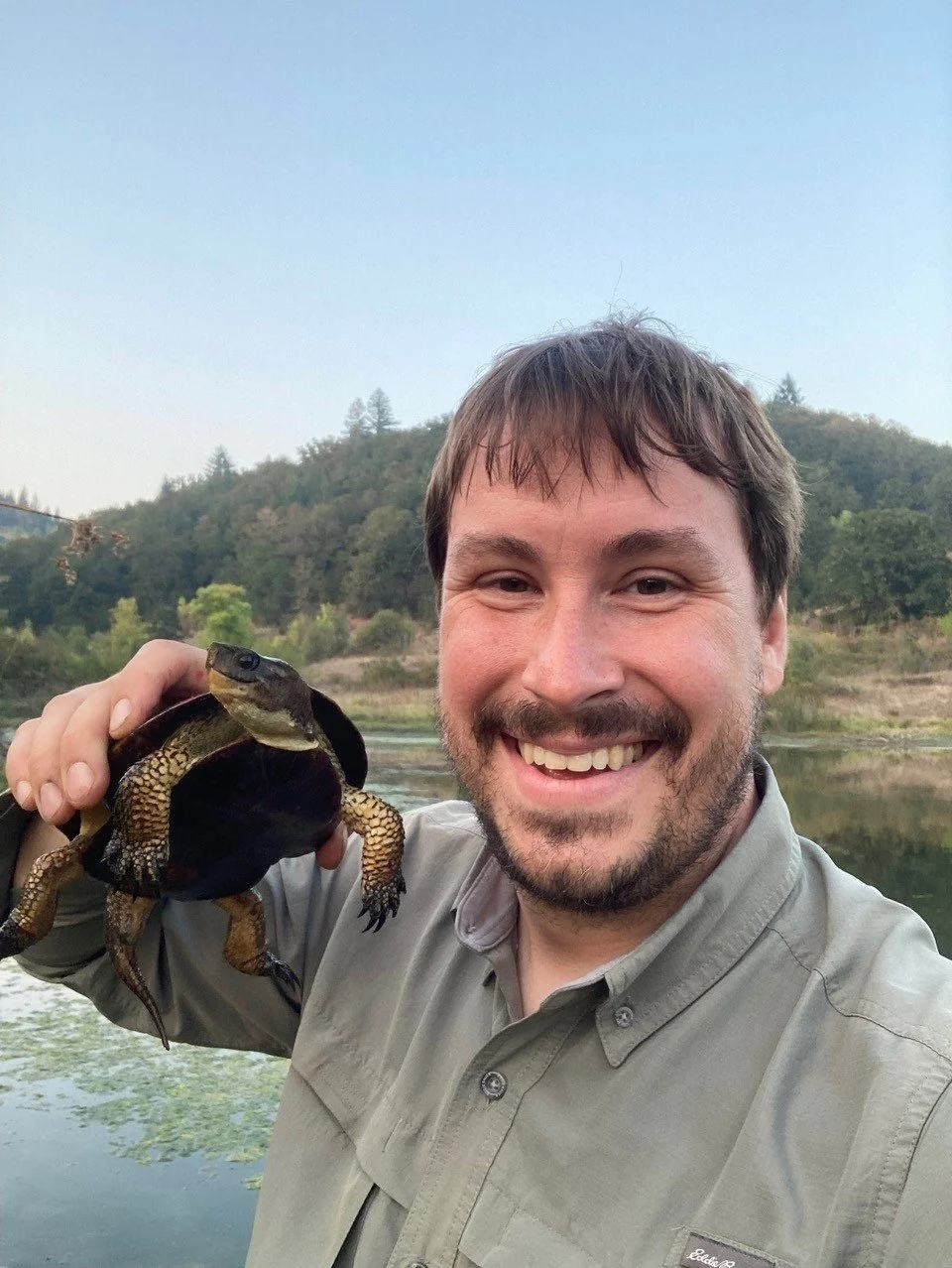
Gareth Hopkins
Oregon Vice-President
Two-year Term: Spring 2026-Spring 2028
I am an Associate Professor of Biology at Western Oregon University, where I teach a variety of courses in vertebrate natural history, animal behavior, entomology, and data analysis. My research is focused on how animals are affected by, and respond to, environmental change, with a special focus on amphibians, reptiles, and insects. This research spans layers of biological organization, from behavioral and physiological responses of individuals to evolutionary responses of populations and ecological responses of communities. I regularly work across disciplines and collaborate with state agencies (e.g., ODFW) and other local organizations to develop conservation solutions. I was trained as a herpetologist and entomologist in Canada (BSc: University of Northern British Columbia), the United States (PhD: Utah State University), and Australia (Post-doc: University of Melbourne), and have studied the effects of environmental stressors ranging from salinity to light pollution to invasive species on organisms as diverse as newts, snakes, turtles, crickets, and weevils. My current work focuses mostly on the responses of amphibians, reptiles, and insects to environmental stressors and habitat restoration in terrestrial and aquatic environments in the mid-Willamette valley and coast of Oregon. I am particularly enthusiastic about introducing undergraduate students to the scientific process and have an active undergraduate research lab at WOU.
-
Madison McGroarty
Southern Region Vice-President
Two-year Term: Spring 2025-Spring 2027
Madison McGroarty received her A.S. in Wildlife Ecology from Santa Fe College and then graduated from the University of Florida with a B.S. in Wildlife Ecology and Conservation. She has worked at the USGS Wetland and Aquatic Research Center processing stable isotope samples from freshwater turtles, Santa Fe River Turtle Survey performing snorkel capture surveys and data collection of Florida’s native freshwater turtles, the Florida Wildlife Care wildlife rehabilitation center, and in St. John, VI for the VI Undergraduate Coral Research studying mangrove influenced coral reefs. Madison has been working for the USFWS since 2021 where she was the USFWS species lead for northwestern pond turtle in Washington and now works with private landowners in northern California to provide voluntary habitat restoration on their properties for the benefit of at-risk species. She is dedicated to the conservation and recovery of at-risk species with a personal and professional focus on declining freshwater turtles.
-
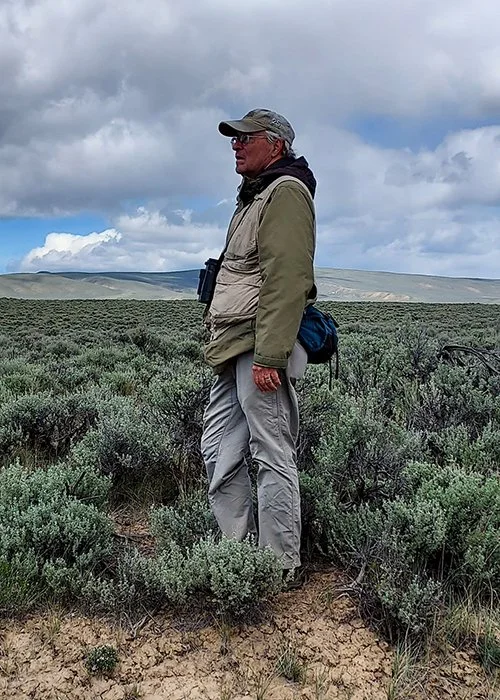
Paul Henricks
Inland Region Vice-President
Two-year Term: Spring 2025-Spring 2027
Paul is currently a Senior Scientist with the Montana Bird Advocacy, a very small non-profit based in Missoula. Prior to retirement he was a zoologist with the Montana Natural Heritage Program for 18 years, then became interim curator of the Philip L. Wright Zoological Museum and an adjunct assistant professor (teaching mammalogy), both in the Division of Biological Sciences at the University of Montana. He spent most of my formative years in Billings, Montana, then grew up and received his college education at the University of Montana in Missoula (B.A., M.A.) and Washington State University in Pullman (Ph.D.). Paul’s graduate research focused on the foraging and breeding ecology of American Pipits on the alpine expanses of the Wyoming-Montana border. He has a broad interest in natural history, both vertebrate and invertebrate, and spends as much time as possible poking around outdoors. He is coauthor on SNVB’s Northwest Fauna No. 5, the book Amphibians and Reptiles of Montana (Mountain Press 2004), and Birds of Montana (Buteo Books 2016). When not working, he pursues birds and mountain experiences with his wife and dog, likes to camp and hike in a variety of landscapes, and try his hand at writing haiku. Paul has been a member of SNVB for a long time (I’m not sure how long) and was Inland Region VP for ten years. SNVB fills an important niche in the community of northwestern naturalists, and I hope to see it continue to thrive in that capacity. Therefore, I am seeking another term as Inland Region VP.
-
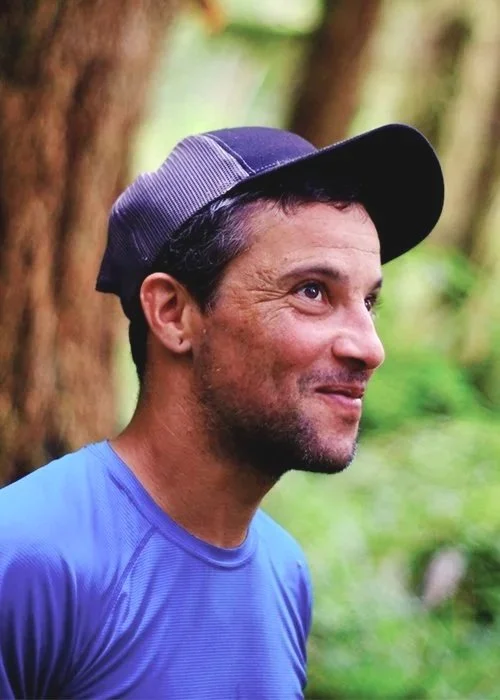
Wesley Bowens
Secretary
Two-year Term: Spring 2025-Spring 2027
Wesley is a dedicated Pacific Northwest naturalist with a broad range of experience in stream ecology, ornithology, and herpetology. He is currently working on his Master’s in Environmental Studies from The Evergreen State College and received a Bachelor of Arts & Sciences in Evolutionary Biology & Natural History from The Evergreen State College. Wesley enjoys exploring his passions for birds, botany, environmental education, and the Olympic headwaters in his free time.
-
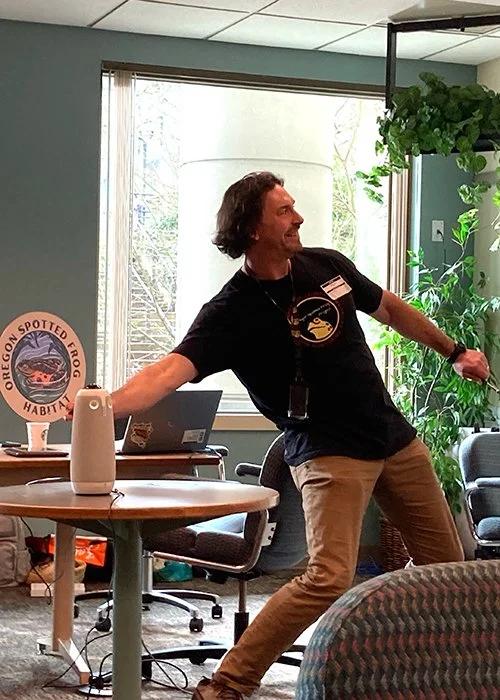
Teal Waterstrat
Treasurer
Three-year Term: Spring 2024-Spring 2027
Teal grew up bouncing back and forth between a far-away land called Mississippi, where there were no snow-capped mountains and cool emerald seas (but lots of cool vertebrates and people), and the PNW. He permanently landed in the Pacific Northwest to pursue a degree in Biology from the University of Washington and later a Masters of Environmental Studies from The Evergreen State College. For the past 20 plus years he has enjoyed working in numerous natural resource management agencies, museums, non-profits, and also washing dishes and riding his bicycle for money. Currently he holds s position with the USFWS in Lacey, Washington and shares his days gallivanting around the South Puget Sound with his offspring, Hudson and Leif, and his lovely wife, Sheila. Teal's first involvement with SNVB was the 2007 annual meeting in Victoria. As Treasurer he hopes to help the ongoing growth and support of the SNVB membership and mission.
-
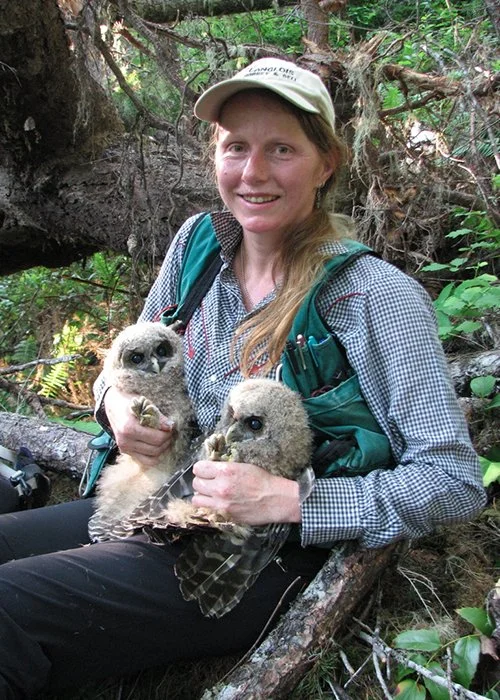
Amy Price
Trustee
Three-year Term: Spring 2024-Spring 2027
I have spent over 30 years working as a wildlife professional predominantly in western Oregon. Currently as the Forest Biologist for the Elliott State Research Forest, I advance forest management and research efforts consistent with the Elliott’s foundational and regulatory documents, adhering to the mission and management policies adopted by the Oregon State Land Board.
Previously while with USFWS’s Ecological Services, I served as a consultation biologist primarily focusing on threatened and endangered forest species. While with Bureau of Land Management, I managed recovery efforts for western snowy plovers and monitored northern spotted owls for demographic research. I have also conducted habitat assessments, botanical, hydrological and wildlife surveys including other raptors, amphibians, bats, coastal marten, marbled murrelet, pollinators, and other invertebrates.
Prior to becoming a federal biologist, I worked for my alma mater (Oregon State University) in the department of Zoology conducting snake population and steroid hormone studies. Later while still with OSU, I worked for the Oregon Cooperative Fish and Wildlife Unit conducting field and laboratory research of northern spotted owls and forest mammals. I assisted multiple other projects including, identification and enumerating prey remains in owl pellets and photo-microscopy to measure teeth of small mammals, capture and banding of Strix owls. Additionally, I conducted ground surveys, tree climbing, capture, radio collar attachment and telemetry tracking to document the home range, distribution, and abundance of red tree voles in western Oregon.
I enjoy spending free time with my dogs and close friends casually birding, botanizing & herping, camping in remote locations, cooking, foraging wild foods, wine tasting as well as beach combing and tide-pooling.
-
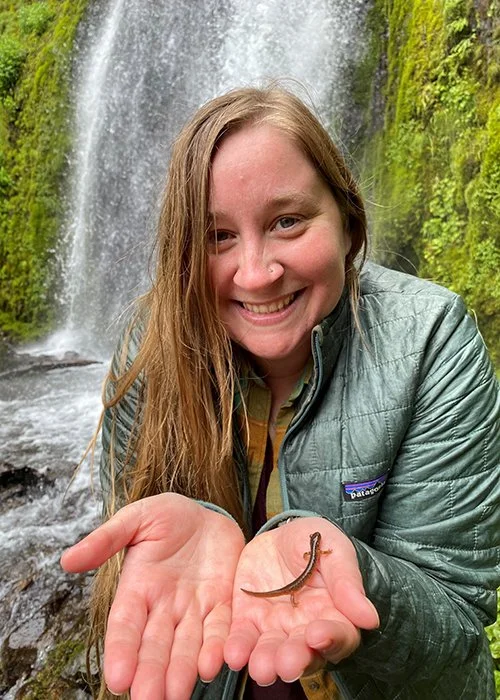
Chelsea Waddell
Trustee
Three-year Term: Spring 2026-Spring 2029
Chelsea Waddell has been part of the SNVB board since 2015. She began with SNVB as the Murreletter Editor and enjoys supporting Northwestern Naturalist as an Associate Editor. She has been a Trustee on the SNVB Board since 2017. Chelsea is a Wildlife Biologist with the US Fish and Wildlife Service where she enjoys contributing to amphibian, reptile, and wildlife conservation!
-
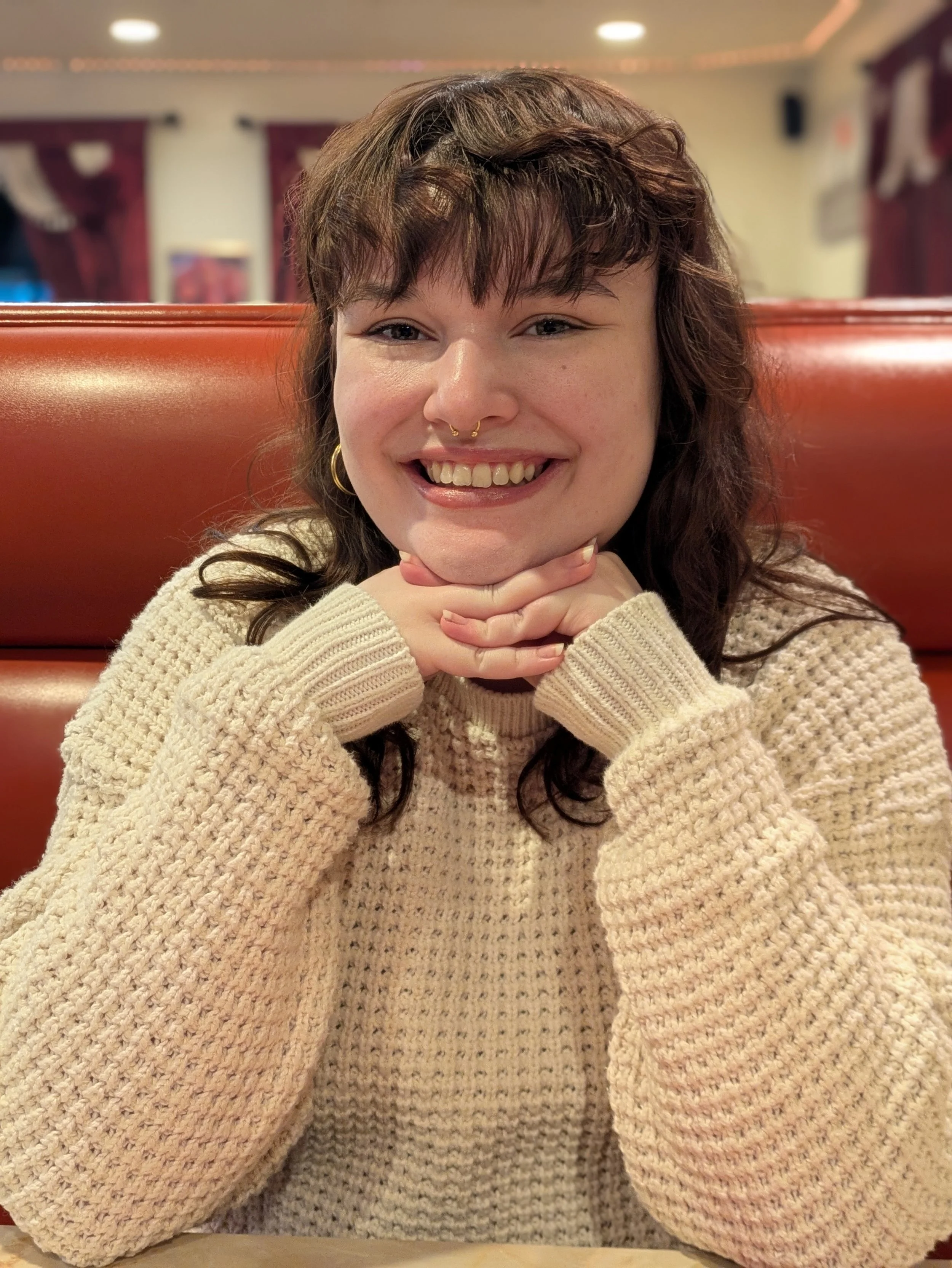
Sophia Smith
Trustee
Two-year Term: Spring 2026-Spring 2028
My name is Sophia Smith, and I live in Independence, OR with my husband Andy and my dog Rosie. I'm a nontraditional student who initially had a brief corporate office career (which didn't suit me) before going back to school to pursue a Fisheries, Wildlife, and Conservation Sciences degree at OSU. I'm excited to meet and learn from the incredibly talented members of SNVB. I also hope to bring a unique perspective to SNVB amidst their exciting revitalization efforts.
Non-voting Board Members (Board Appointed)
-
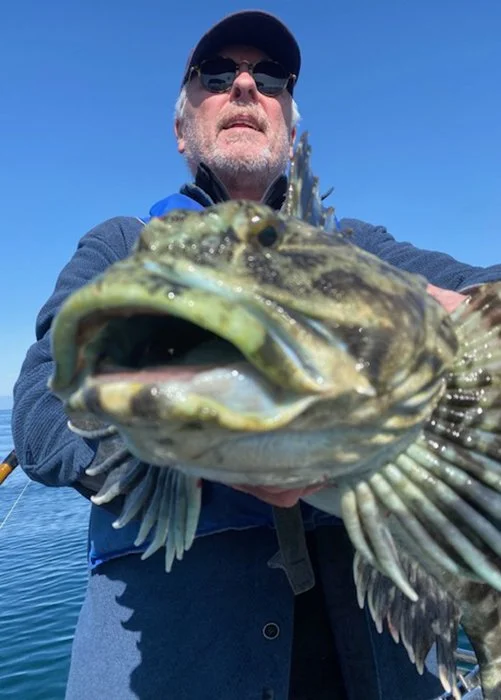
Bob Hoffman
Northwestern Naturalist Editor (interim)
I am a retired aquatic ecologist. I have a MS in Fisheries Science from Oregon State University, where I was also employed as a Senior Research Assistant, and as an Ecologist with the USGS Forest and Rangeland Ecosystem Science Center in Corvallis, Oregon. I developed, implemented, and coordinated aquatic ecosystem research for 30 years, investigating the water quality characteristics of mountain ponds and lakes in the national parks and Cascade Range of the Pacific Northwest. This research included investigations of the impact of introduced fish on the native biota of mountain ponds and lakes and the use of passive capture methods to remove nonnative introduced fish from lakes. I was also a member of the long-term water quality monitoring program at Crater Lake National Park, Oregon. As editor of Northwestern Naturalist, my primary focus is assisting authors in publishing their research in the journal.
Email: nwneditor@thesnvb.org
-
Kathryn Ronnenburg
Northwestern Naturalist Assistant Editor
-
Tara Chestnut
Scholarship Committee Chair
Tara Chestnut has dedicated her 30+ year career to public service as an ecologist with the US Forest Service, National Park Service and US Geological Survey, and a wildlife biologist for state and county agencies. She has led ecological research and monitoring focused on birds, mammals and amphibians in terrestrial and aquatic ecosystems, and published more than 30 peer-reviewed papers in the scientific literature. Tara became involved with SNVB when her undergrad mammalogy professor signed up all of his students by including the cost of membership in the course fees. She has served on the board in several positions including President, Trustee and Secretary and is currently Chair of the student scholarship committee. Tara earned her PhD from Oregon State University studying the ecology of wildlife diseases.
Additionally, Tara is skilled in science communication and community engagement. Notable accomplishments include collaborating with artists to teach elementary school students and National Park visitors about the evolution of flight. For the last 7 years, Tara has been a scientist-narrator in an online event, March Mammal Madness, that in 2025 reached more than one million K-12 students plus many more community members.
-
Marc Hayes
Historian
Marc is an aquatic and herpetological ecologist with 52 years of professional experience ranging from consulting to research and teaching in the US Pacific States and Florida, Mexico and Central America. Marc’s early education was in marine sciences and entomology at UCSB, where he obtained his BA but rapidly shifted to herpetology while working on an MA at Cal State University Chico, and then herpetological ecology while obtaining a PhD begun at USC and finished at University of Miami, Florida. He has taught diverse field, lab and lecture courses, and workshops for many public and private entities. The last 20+ years of his working career were spent with the Washington Department of Fish and Wildlife leading the Aquatic Research Section, whose research focused on at-risk amphibians and the forestry practices effects. Today, he continues his work as the Aquatic & Herpetological Research Cooperative based in Eagle Point, OR, where he loves to do snake research and lives with his wife, Brigette, his papillon, Kiwi.
-
Vacant
Northwestern Fauna Editor